Service
Vital Pulp Therapy
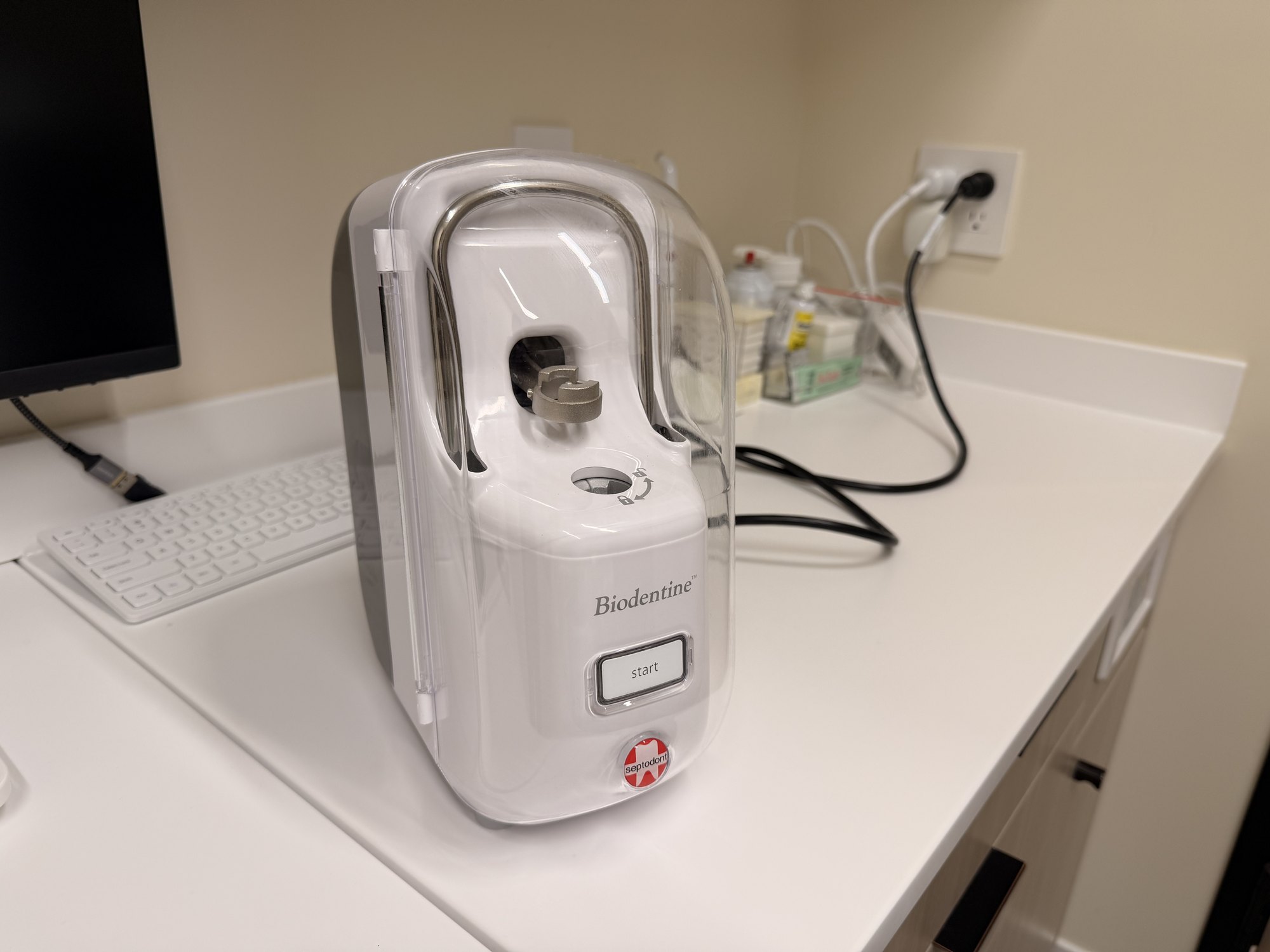
Not every deep cavity or exposed nerve needs a full root canal. When the pulp inside a tooth is inflamed but still alive and able to heal, vital pulp therapy removes only the damaged portion and seals the rest with a bioceramic material such as Biodentine. The tooth keeps its natural blood supply and nerve. Dr. Fred Monempour evaluates every case under the microscope and with 3D imaging to decide whether a tooth qualifies.
What Is Vital Pulp Therapy?
Inside every tooth is the pulp: the nerve, blood vessels and connective tissue that keep the tooth alive. Deep decay, a crack or a traumatic injury can inflame or expose it. For decades the standard answer was a root canal, which removes the pulp entirely. Research over the last fifteen years, and the arrival of bioceramic materials such as Biodentine and MTA, changed that picture. When inflammation is limited and the pulp can still heal, a smaller procedure often does the job.
Vital pulp therapy includes three related treatments. Indirect pulp capping leaves a thin layer of softened dentin over the pulp and seals it so the tooth can repair itself from the inside. Direct pulp capping places a bioceramic material directly on a small, clean pulp exposure. Pulpotomy removes the inflamed pulp from the crown of the tooth while preserving the healthy pulp in the roots. The right option depends on how far the inflammation has spread, which is why diagnosis under magnification matters.
Signs You May Need Vital Pulp Therapy
Vital pulp therapy is considered when the pulp is inflamed but still healthy enough to recover. Signs that a tooth may qualify include:
- Sensitivity to cold that fades within a few seconds once the stimulus is removed
- A deep cavity or fracture that reaches close to or into the pulp, found on an X-ray or during a filling
- Mild, short-lived discomfort rather than spontaneous or throbbing pain
- A young permanent tooth whose roots are still forming
- No swelling, no abscess and no dark area at the root tip on imaging
Lingering pain after hot or cold, pain that wakes you at night, swelling, or a tooth that no longer responds to cold testing usually means the pulp cannot be saved and a root canal is the better treatment.
Understanding Vital Pulp Therapy
The materials used in vital pulp therapy are what make it reliable. Biodentine is a calcium silicate cement that sets hard, bonds to dentin, resists bacteria and stimulates pulp cells to form a bridge of new dentin over the treated area. Mineral trioxide aggregate (MTA) and other bioceramics work on the same principle. These materials replaced the older calcium hydroxide liners that often failed within a few years.
Technique matters as much as material. The exposed pulp has to be clean and free of bleeding before it is sealed, the field has to stay dry and isolated, and the final restoration must seal the tooth completely. Working under the surgical microscope lets Dr. Monempour judge the condition of the pulp tissue directly, remove exactly what is inflamed, and place the material with precision. Cone beam CT imaging confirms there is no infection at the root tip beforehand.
When Do I Need Vital Pulp Therapy?
Timing is the deciding factor. The window for vital pulp therapy is open while the pulp is inflamed but still healthy, and it closes once infection sets in. If your dentist has found a deep cavity near the nerve, if a filling procedure exposed the pulp, or if you have a young permanent tooth with an injury or deep decay, ask about vital pulp therapy before a root canal is scheduled. Call 310-278-5993 for an evaluation; we can usually see you within a day or two, and the same day for pain.
The Treatment Process
What to Expect
Evaluation and pulp testing
Dr. Monempour tests how the tooth responds to cold and pressure, reviews a 3D CBCT scan of the root and surrounding bone, and confirms the pulp is still vital and free of infection at the root tip.
Isolation and removal of decay
The tooth is numbed and isolated with a rubber dam. Under the microscope, all decay and any cracked structure are removed, and the pulp is inspected directly.
Treatment of the pulp
Depending on what the microscope shows, the exposure is capped or the inflamed crown portion of the pulp is removed. The area is disinfected, bleeding is controlled, and a bioceramic material such as Biodentine is placed over the healthy pulp.
Sealing and follow-up
The tooth is sealed with a permanent filling or a temporary restoration ahead of a crown from your dentist. We recheck the tooth at follow-up visits to confirm it remains comfortable and responsive, with new dentin forming on imaging.
The Monempour Difference
Our Approach to Vital Pulp Therapy
Specialist diagnosis: The success of vital pulp therapy depends on choosing the right tooth. As an endodontist, Dr. Monempour evaluates pulp health every day and will tell you plainly when a root canal is the safer choice.
Microscope and 3D imaging: Every case is examined under a surgical operating microscope and planned with cone beam CT so the inflamed tissue is removed precisely and the healthy pulp is left undisturbed.
Bioceramic materials: We use Biodentine and other bioceramics that seal the pulp, resist bacteria and stimulate natural repair.
Honest expectations: Vital pulp therapy has a high success rate in well-selected teeth, but no treatment is guaranteed. If a treated tooth later develops symptoms, root canal treatment remains available and the earlier procedure does not make it harder.
Your Questions Answered
Frequently Asked Questions
We believe that informed patients make the best decisions about their care. Here are answers to common questions about root canal therapy.
Most patients return to normal activities the same day or the next. Some mild soreness is normal and typically resolves within a few days with over-the-counter medication. Dr. Monempour’s team will provide clear aftercare instructions before you leave.
Your general dentist may refer you to an endodontist for complex cases, persistent pain, or when specialized equipment and expertise are needed. As a board-trained endodontist, Dr. Monempour focuses exclusively on diagnosing and treating tooth pain and performing root canal therapy — it's all he does, every day.
You're not alone — and you're in the right place. Our team is experienced in treating anxious patients with patience, clear communication, and a calm environment. We also offer sedation options so you can feel completely at ease throughout your visit.
Yes. We understand that tooth pain doesn't wait, and neither should you. If you're experiencing a dental emergency, call our office and we'll do everything we can to see you the same day.
Your first visit begins with a thorough evaluation, including advanced imaging if needed. Dr. Monempour will take the time to explain your diagnosis clearly, answer all your questions, and outline a treatment plan — with no pressure and no rushing.
Dr. Fred Monempour
Dr. Monempour is a highly experienced endodontist known for his impeccable diagnostic skills, exceptional clinical expertise, and unwavering commitment to patient centered care. He is trusted for performing some of the most complex endodontic cases, combining precision, compassion, and state-of-the-art technology.
What happens after I send my message?
Our front desk will review you information and contact you within 24 hours. If this is an emergency, please call our office.We will accommodate your schedule to set up an appointment in a timely manner.
Address:
433 N Camden Dr
Ste 1100
Beverly Hills, CA 90210
Get Directions